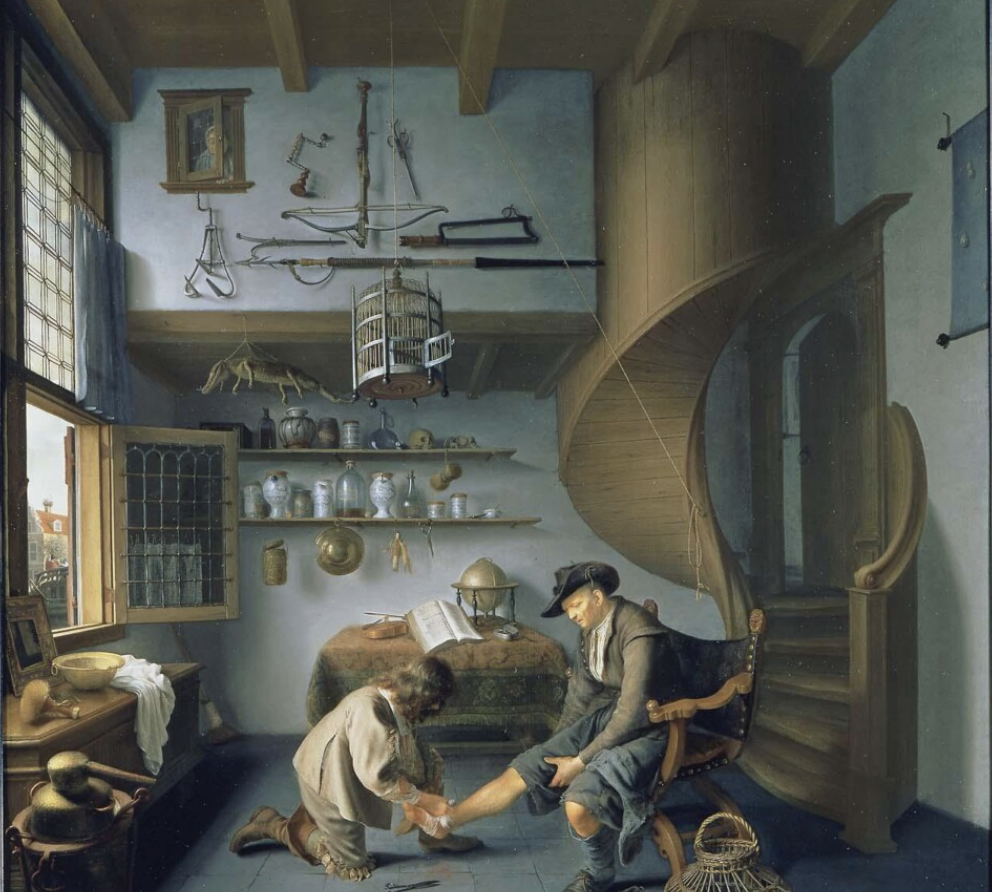
Isaak Koedijk, The Barber-Surgeon (detail), ca. 1649-1650.
On Saturday, September 26th, members of the California and Northwest Chapters gathered at The San Diego Museum of Art for a docent-led tour of a special exhibition featuring loans from the world-renowned Dutch holdings of the Museum of Fine Arts, Boston, followed by lunch at The Prado at Balboa Park.
The morning offered an extraordinary view of Dutch society and artistic traditions in the 17th century. By 1600, the Dutch Republic had emerged as an international economic powerhouse. A seafaring nation, albeit a geographically tiny one, it was a self-governing republic of seven northern provinces that had joined in successful revolt against Spanish rule. Its far greater degree of local autonomy set it apart from the absolute monarchies of Europe, and its economy was plugged into the major trade routes connecting Europe, the Americas, Asia, and Africa through the Dutch East India Company, founded in 1602. While fostering a liberal economy and social tolerance at home, the Republic also participated in colonial expansion and the transatlantic trade of enslaved peoples.
With neither a royal court nor a state church in need of images (Catholicism had been banned in 1581 in favor of the Protestant Reformed Church), patronage of the arts shifted to the merchant class, whose new wealth was poured into imported luxury goods and secular paintings. Highly detailed still lifes, interiors, landscapes, and portraits were small enough to illuminate the interiors of Dutch townhouses, filling domestic life with order, beauty, color, and signs of prosperity. The exquisite works from Boston were aspirational “mirrors of nature,” reflecting the ideal values of everyday life in the Netherlands and its place in a rapidly globalizing world.
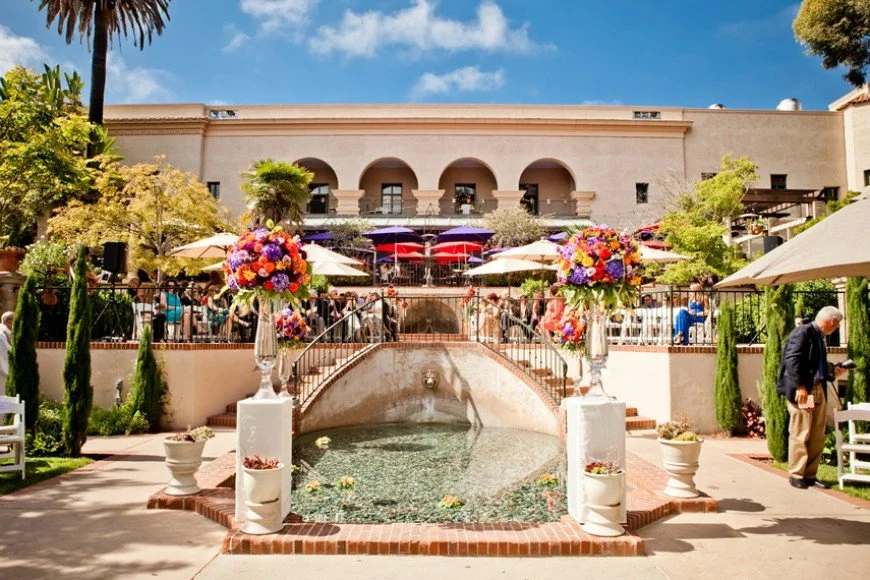
pradobalboa.com
Afterward, the group walked over to The Prado at Balboa Park for lunch. Over good food and lively conversation, patrons had the chance to reflect on the morning’s paintings, bringing the day to a warm and fitting close.